About the MBA programme
The full-time MBA is an intensive one year Masters programme. It emphasises general management with a high degree of integration between the strategic dimension and functional issues.
The syllabus addresses international management issues and such perspectives are enhanced by the international diversity of the participants. The International Study Visit (travel/accommodation costs covered in the programme fee) is a distinctive feature underpinning the international theme of the MBA. This gives participants the opportunity to interact with a range of organisations in continental Europe and is delivered in conjunction with partner Business schools. In the past student groups have visited international agencies such as the WTO and ILO, Utrecht in the Netherlands and the European Parliament in Brussels. Recent visits also include to internationally orientated companies in Prague and Vienna where the group had an opportunity to speak to and question managers about the distinctive operating environment in Central and Eastern Europe.
The MBA comprises three inter-related strands of themed modules:
MANAGEMENT
This is the core of the MBA’s taught component. Functional specialisms such as Marketing and Finance are explored and integrated into a consideration of the broader Business environment and an important treatment of Strategic Management issues. The prime objective is the development of a wide understanding of Management theory such that it can be confidently applied to the evaluation and implementation of solutions relevant to complex organisational issues.
• The Manager’s Environment: Provides insights into the overall business context within which organisations operate; this includes consideration of appropriate Economic concepts.
• Management Finance: Develops a critical understanding of Accountancy and related financial issues relevant to identifying, measuring and communicating relevant economic information and as an aid to decision making.
• Management Foundations: From an exploration of the managerial process itself this module moves to the investigation of the key functional management areas of Operations, Marketing, Human Resource Management and relevant aspects of International Law.
• Management Integration: Introduces a cultural dimension and pursues the integration of the introductory Management modules via an extended case study.
• Strategy 1 and Strategy 2: These modules introduce a range of techniques for exploring the strategic position of an organisation.
• Options: Participants select two modules from a varying list covering key disciplinary areas such as Finance, Marketing, Human Resource Development, Project Management, etc.
RESEARCH
This strand takes participants through a development process which enables the critical application of research techniques from the ability to find information and manage facts through to the completion of a complex dissertation.
• Management Statistics: This module assumes no prior knowledge of statistical techniques. It develops a fundamental understanding relevant to the processing of quantitative management information in the organisation.
• Management Consultancy Project: Develops a critical understanding of a self-selected body of Management literature and encourages its application to a practical management issue. The participant is required to adopt the role of a consultant and to develop proposals that are capable of implementation.
• Research Methods for Managers: An advanced course in research methods that covers both philosophical issues and the development of practical skills for researching Business and Management topics.
• Dissertation: The Consultancy Project and the Research Methods components are designed to prepare participants for the demands of preparing a dissertation on a specialist Business or Management subject of choice. Such specialisation may be further underpinned by option choice.
LEARNING
Reflection upon the managerial process and the development of management skills via individual and group activities is directed towards an increased capacity for independent learning relevant to future career aspirations.
• Learning to Manage: Aims at a deeper understanding of the skills and concepts required to manage oneself and others within the workplace. Personal awareness and effectiveness are dominant themes.
• Developing Management Skills: The emphasis is on contemporary management practices concerned with interpersonal, inter-group and organisational skills. Understanding of theory is encouraged by opportunities.
About the Department
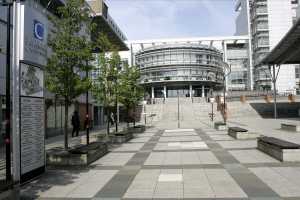
Caledonian Business School is the largest of its kind in Scotland and is part of a modern university, on a hi-tech campus, providing cutting-edge programmes – all ensuring that the learning environment is of direct benefit to career development.
Graduate Academy of Business Our Graduate Academy of Business has recently been established to further enhance the Schools reputation for providing high quality postgraduate, post-experience and professional programmes to both organisations and graduates across Scotland.
Strengths We continue to build upon established strengths of a wide choice of programmes, a strong vocational orientation, an emphasis on applied research, national and international consultancy work and close links to employers and to the key public, private and voluntary sector institutions that develop and implement the range of strategies that underpin social and economic development in Scotland.
Diversity CBS provides a strong and diverse portfolio of programmes, enabling students to choose from broad-based business degrees, professional and functional based degrees such as accounting, marketing and human resource management, and programmes that specialise in key economic sectors such as financial services, tourism, media, leisure, public and the voluntary sector.
Vocational All of our programmes have a clear and strong vocational basis. They are designed to meet the needs of employers, the personal, professional and management development needs of graduates and where appropriate, the educational requirements of professional bodies.
Research Applied research is central to the mission of the Caledonian Business School, it is critical in ensuring the quality and relevance of our portfolio provision. Our research activities across the public, private and voluntary sectors resulted in CBS receiving the highest Research Assessment Exercise (RAE) rating of any post-1992 University in Scotland and the 3rd highest in the UK.
Industry Links As a business school, we pride ourselves in our strong links with industry across Scotland, the UK and beyond. These links support both our provision of services and the development of our activities as we aim to play an important part in creating a more innovative and globally competitive industrial base in Scotland.
Overall, the combination of size, contemporary themed groups, specialist Research Centres, and strong employer and professional body links, gives Caledonian Business School a strong and distinctive role within Higher Education provision in Scotland.
|