Institution
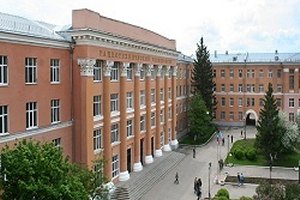
Ryazan State Radio Engineering University
Address
Ryazan State Radio Engineering University, 59/1 Gagarina Street, Ryazan 390005, Russia
Telephone
+7 (4912) 46 03 03
E-mail address
rgrtu(at)rsreu.ru
Faculties
Radio Engineering and Telecommunication;
Electronics;
Automation and Information Technologies in Management;
Computer Science;
Engineering and Economics;
Humanitarian Institute;
Extramural
Language of tuition
English
Type of course
Full-time undergraduate, graduate and postgraduate courses leading to B.Sc., M.Sc. and Ph.D. degrees
Length of course
Preparatory Course: one year - two semesters
B.Sc. Program: 4 years - eight semesters
M.Sc. Program: 2 years - four semesters
Ph.D. degree Program: 3 years.
Date of commencement
Academic year / Fall semester: The 1st of September – the end of January
Spring semester: first week of February – the end of July
Preparatory courses: the 1st of October – the end of June
Class size
From 10 to 30 depending on the course
Accommodation
University Hostel places are available for all foreign students.
Admission requirements
For undergraduate courses: Secondary School Graduation Certificate and Unified State Examinations with good results in Mathematics, Russian and the discipline depending upon the course.
For graduate programs: B.Sc. degree with official transcripts. For postgraduate programs M.Sc., Dipl.Ing. or its equivalent with excellent grades in the official transcripts.
All classes are presented in Russian. Foreign students have the opportunity to learn Russian language at the preparatory courses.
Rector
Prof. Mikhail Vladimirovich Pronin

Ryazan State Radio Engineering University
RSREU (up to 1993 Ryazan State Radio Engineering Institute) was founded in 1951. It is located in Ryazan, an ancient Russian town situated on the bank of the Oka-river, 180 kilometers south-east from Moscow. The town has a rich history and is famous for its cultural traditions.
The University ranks high among the leading educational institutions in Russia. Since its foundation, the University has trained more than 50 000 specialists. Presently more than 6 500 students are enrolled at the University.
The University offers the following scheme of training: bachelor-specialist-master. It means that a student may take a 4-year course and obtain a bachelor degree. He may continue training for a year and obtain a specialist diploma. A bachelor may obtain a master's degree in 2 years of study. A master's degree for a specialist takes only one year to obtain. Masters and specialists can continue their scientific research work taking postgraduate courses.
The University is a large specialized academic and research center which consists of 5 full-time departments: Radio Engineering and Telecommunication, Electronics, Automation and Information Technologies in Management, Computer Science, Engineering and Economics. The University trains engineers, economists, managers. Bachelor's (23 programs), Specialists and Master's (13 programs) degrees earned here make a strong basis for future career building.
The teaching staff consists of 550 experienced members including professors, assistant professors, D. Sc., PhD, the State Prize laureate academicians, honorable scientists, etc.
The University is equipped with up to date academic and research facilities. Educational television, cinema, audiovisual technologies, computer-aided design systems, information technologies, etc. are widely used in academic process. Our international graduates take perspective and well-paid positions all over the world.
A research library with reading halls is at the disposal of the students. The library funds contain more than 900 000 volumes.
Scientific research and experimental work is carried out at the University. The results are well-known in Russia as well as abroad.
At the University students are engaged in scientific research work under the guidance of experienced supervisors. Advanced students participate in regional and international scientific conferences and in Annual Student Scientific Conference of the University.
The main directions of scientific activity of RSREU are as follows:
1. Nanotechnology and nanoelectronics.
2. Photovoltaic (PV) as well as solar grade silicon technologies, solar cells technologies, solar cells nanotechnologies and PV modules technology.
3. Microelectromechanical systems (MEMS).
4. Vacuum and Plasma Electronics.
5. Challenging radio-engineering, information and telecommunication devices and systems.
6. Mathematical support, software and hardware for computing complexes, signal, image and 2-D arrays processing systems.
7. CAD, microelectronic devices and equipment technologies and its physical foundations.
8. New information technologies and management technology for scientific -engineering and social - economic spheres.
The University has its own geographically distributed high-speed corporate network Extranet including more than 2000 computers located in different buildings and hostels of the University. Internet and Intranet - sites of the University, digital library and other information resources are also functioning. The University has an access to global networks (Internet and Runet) through fiberoptic wire telecommunication channel and uplink.
Before studying the chosen courses at the University, students are required to take a preparatory course.
Upon admission foreign students are provided accommodation in the University hostels.
The University possesses all the necessary facilities to provide the effective process of study. Meeting students upon their arrival to Moscow airports is also possible on the paid basis.
There is a students' clinic, health center, dispensary, a dining room with hot meals.
The University is extending its international relations. It signs cooperation agreements and contracts with foreign institutions and organizations. The University teaching staff actively participate in educational and research activities with higher educational institutions all over the world. The probation of foreign students and teachers is carried out on the grounds of the departments and scientific centers of the University. Today our students represent broad range of counties: the CIS (former USSR - Belarus, Ukraine, Kazakhstan, Georgia, Uzbekistan, Kazakhstan and Moldova), Morocco, Chad, Zimbabwe, Cameroon, Yemen, Nigeria, Vietnam, Angola, Haiti, Guinea-Bissau, Kenya, Indonesia, Cuba, Kenya, Congo, Namibia, Palestine etc.


 ☰
☰